
Last updated November 15, 2026
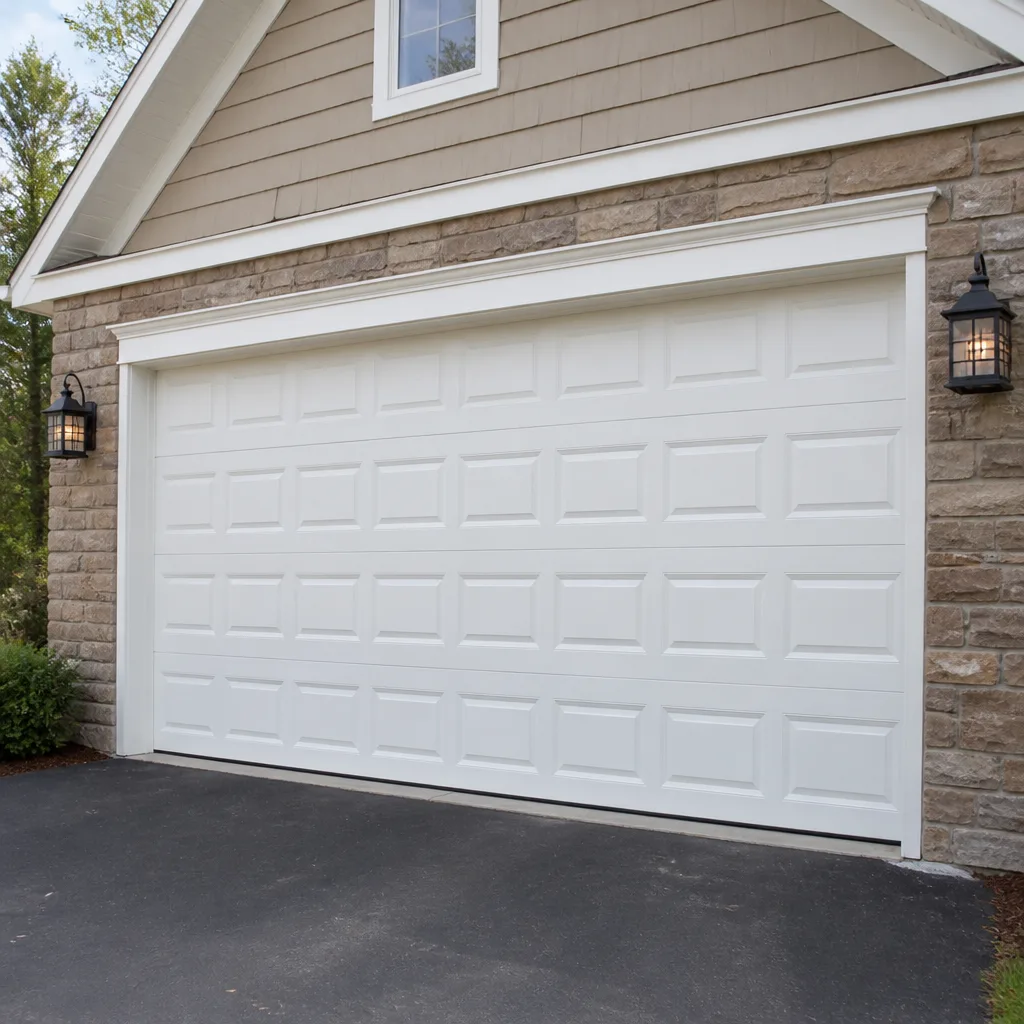 Raised-panel steel
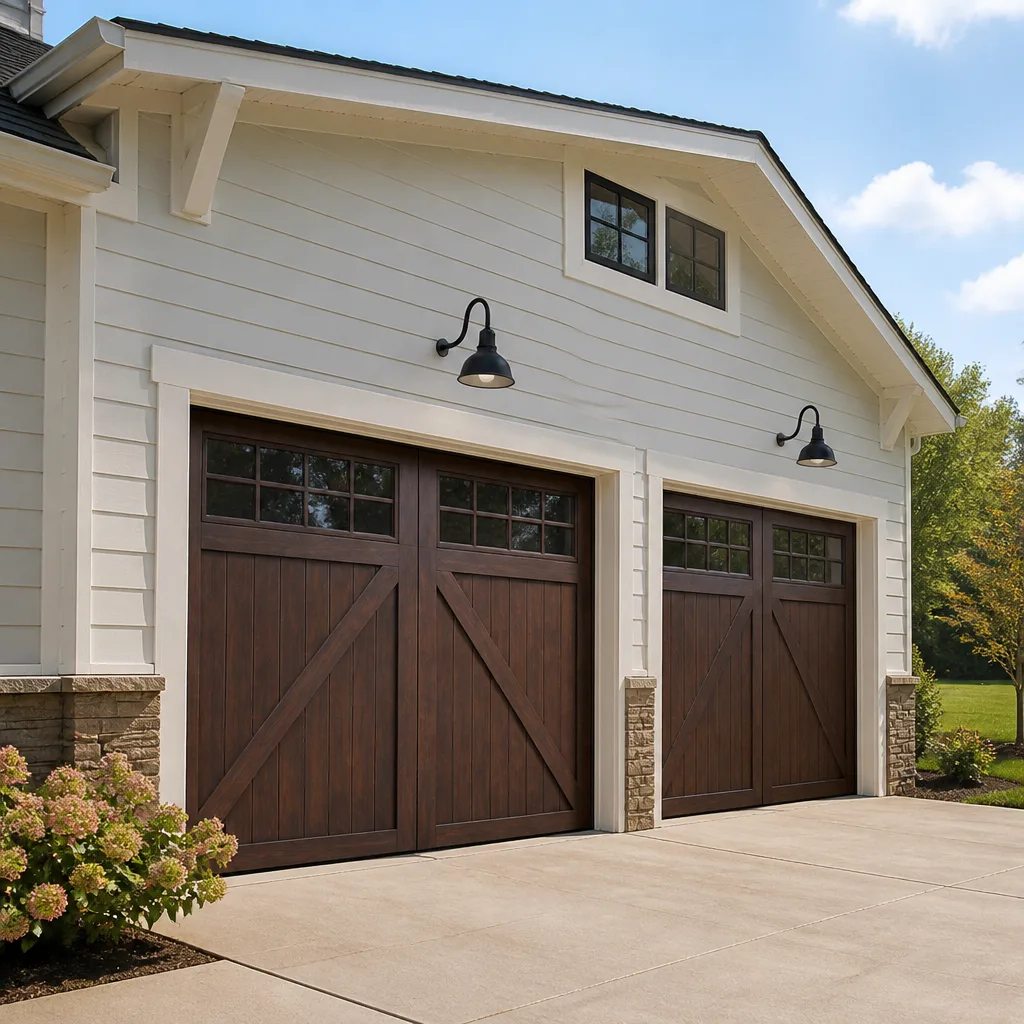 Carriage house
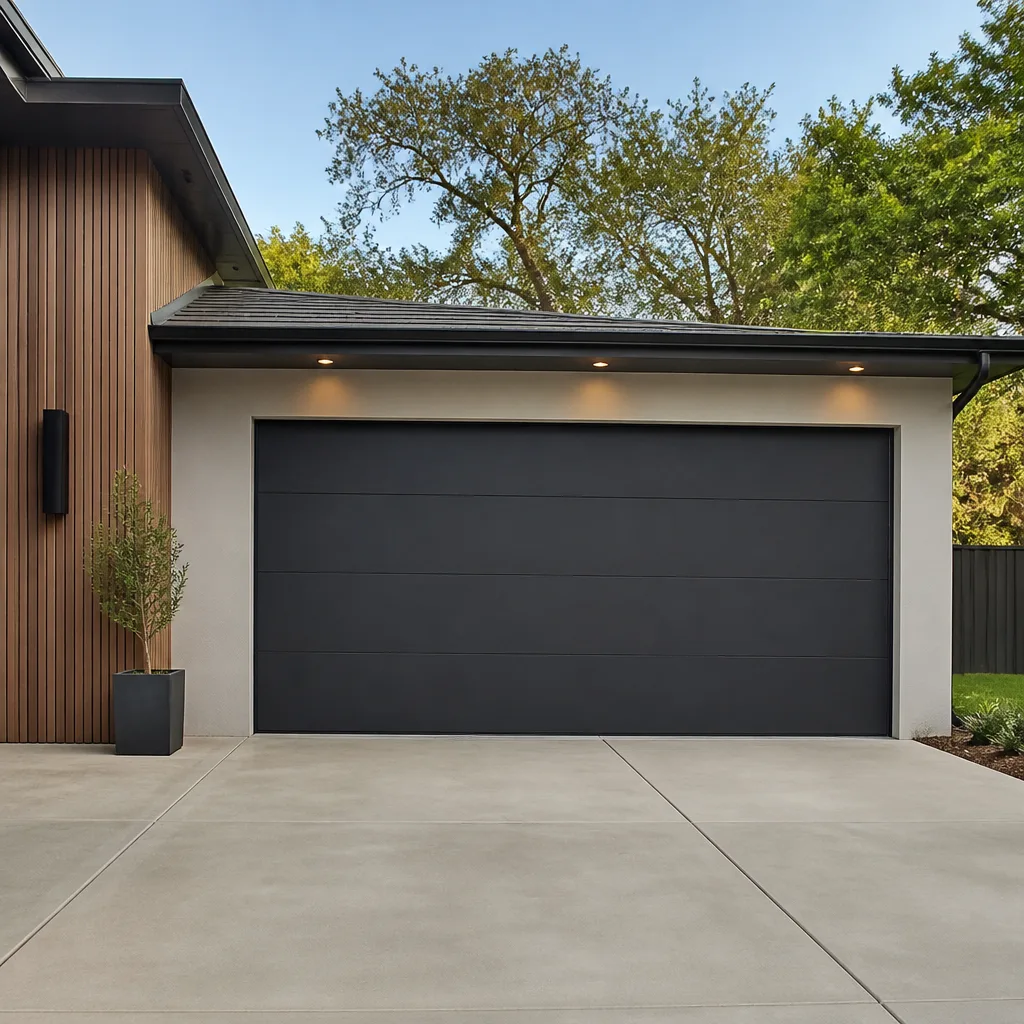 Modern flush
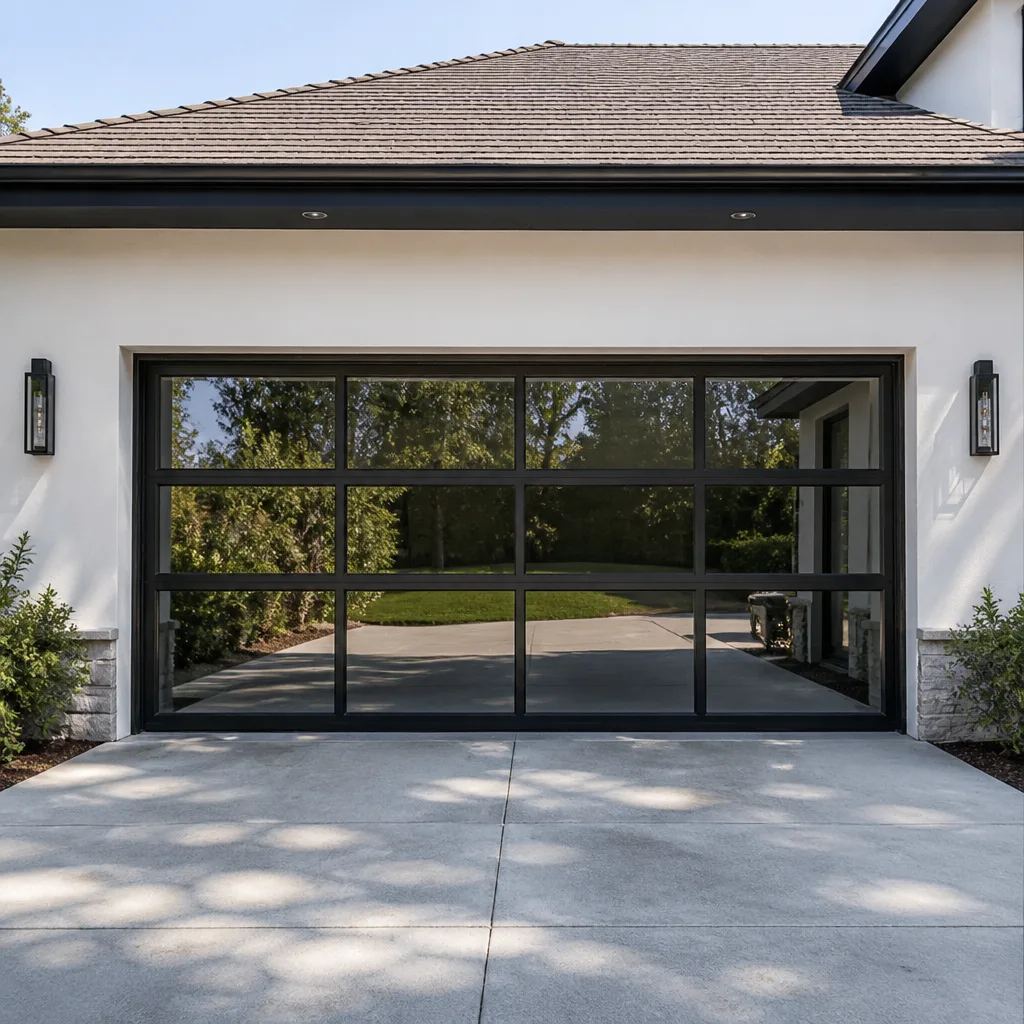 Full-view glass
 LiftMaster openers
 Chamberlain openers
Full 25-point door and opener safety check with every visit - springs, cables, rollers, tracks, and your LiftMaster or Chamberlain opener included
You get a price before we start. It does not change when the pro arrives.
Get your free estimateGarage Door Permits, Codes & Inspections in Tuscaloosa, AL: What You Need to Know
Most homeowners assume a new garage door is a simple swap: pick a style, book the install, done. In Tuscaloosa, the paperwork behind that swap matters more than most people realize. A permit isn’t a formality here. It’s the record that proves the door was installed to the wind-load standard your home is rated for, and it’s the first thing a buyer’s inspector or an insurance adjuster will look for. This guide explains which projects need a permit in Tuscaloosa, which don’t, what an inspection actually covers, and how to make sure your contractor isn’t cutting that corner on your behalf.
Quick Answer
In Tuscaloosa, a full garage door replacement, a door upgrade, and any change to the door’s structural opening or header typically require a building permit, while a like-for-like swap of the same size and rated door is often exempt. Alabama has adopted the International Residential Code, and because Tuscaloosa sits in a tornado-prone region, the wind-load rating on your door is a code concern, not a cosmetic one. The written permit record is what protects you at resale and at claim time.
Styles & brands we work with
- Raised-panel steel
- Carriage house
- Modern flush
- Full-view glass
- LiftMaster openers
- Chamberlain openers
Table of Contents
- Which garage door projects require a permit in Tuscaloosa?
- When is a garage door replacement exempt?
- Alabama’s building code and wind-load ratings
- How to verify your contractor pulled the right permit
- What an inspection actually checks
- How unpermitted work shows up at resale
- Permits, insurance, and storm claims
- The step-by-step permit process in Tuscaloosa
Which garage door projects require a permit in Tuscaloosa?
A permit is generally required in Tuscaloosa when the garage door project changes the building envelope, the door’s rated performance, or the structural opening it sits in. A simple like-for-like swap of the same size, same rating, and same material often falls under exempt replacement, but the line between “replacement” and “alteration” is where homeowners get caught out.
Here’s how we break down the categories most Tuscaloosa homeowners ask about:
- Full door replacement where size, material, or rated performance changes: typically requires a permit. New wind-load requirements apply.
- Widening or altering the door opening or header: almost always requires a permit. This touches structural framing.
- Converting a garage door to a wall or window (or vice versa): requires a permit and often engineering.
- Replacing an opener only: in most cases exempt, since the opener isn’t part of the building envelope.
- Replacing springs, cables, rollers, or tracks: repair, not construction, so no permit.
- Same-size, same-rated door swap where the rated wind-load remains compliant: often exempt, but the installer should confirm with the city’s building department before starting.
We’ve seen plenty of confusion in Tuscaloosa over what counts as “same size” and what counts as a material difference. A steel door swapped for an aluminum one of the same dimensions is still a different product with different rated performance, and that’s where the exemption can fall apart. If you’re unsure how your project is classified, the fastest path is a call to the city’s building department. They’ll classify it in a minute or two.
When is a garage door replacement exempt?
Replacement is generally exempt in Tuscaloosa when the new door is the same size, the same rated wind-load classification, and the same general type as what was removed, and when the work doesn’t alter the opening or framing. That’s a narrow window. Most of the calls we get about “just swapping the door” involve at least one difference from that checklist.
A few reasons an “exempt” replacement turns into a permitted project:
- The new door is heavier than the original, so the track, springs, and attachment method change.
- The new door is rated differently for wind load than the one it’s replacing, which triggers a review in Tuscaloosa.
- The opening needs shimming, re-framing, or a new header to fit a modern door.
- The homeowner wants a taller or wider door than the current opening supports.
- The original install was never permitted, and the city won’t sign off on a replacement without addressing the underlying record.
Point five is the one that surprises people. If a previous door in the home was installed without a permit, Tuscaloosa’s building department may flag that when a new permit is pulled. You end up fixing two problems at once. It’s worth pulling your property records before you commit to a product, especially in older neighborhoods around the Tuscaloosa historic districts where doors have been changed repeatedly over the decades.
Alabama’s building code and wind-load ratings
Alabama has adopted the International Residential Code as the basis for residential construction, and Tuscaloosa applies it with local amendments. For garage doors, the practical effect of that code is that the door must be rated to resist the wind pressures the home is designed for. In a region that sees tornado activity, that rating is a genuine safety requirement, not a box to tick.
Wind-load ratings on garage doors are usually expressed as a design pressure in pounds per square foot. The rating appears on the door’s label and in the manufacturer’s documentation. When a permit is issued in Tuscaloosa for a door replacement, the specific rating for your address will be part of what the reviewer checks against.
Why this matters more than most homeowners expect:
- Doors are the largest opening in an exterior wall. A garage door that fails under wind pressure can compromise the whole structure.
- Rated reinforcement is often required. Higher-rated doors use heavier struts and hinges, and the install has to match that design.
- The label is the proof. If the door isn’t labeled with its rating, an inspector can’t verify it, and the install fails review.
- Reinforcement degrades over time. A door installed correctly at the rated spec performs for its service life, but only if the correct hardware was used.
Brands like Clopay and Raynor publish rated wind-load configurations for their doors. When we quote a replacement in Tuscaloosa, we match the door to the rating the permit will require for that address, then order the reinforcement hardware that goes with it. It’s not glamorous work, but it’s what makes the permit pass on the first inspection.
How to verify your contractor pulled the right permit
You can verify a permit yourself in about ten minutes, and you should. Some contractors actively avoid permitting to reduce their cost and their timeline, and the homeowner carries the risk. The permit belongs to the property, not the contractor, so any problem surfaces on your title, not theirs.
Here’s the verification process we recommend to every Tuscaloosa homeowner:
- Ask for the permit number before work begins. A licensed contractor who pulls permits will have this ready. There’s no reason to withhold it.
- Call the city’s building department and confirm the number is active and that it’s issued for your address.
- Confirm the scope on the permit matches the work being done. A permit for “door replacement” doesn’t cover a widened opening.
- Check who’s listed as the contractor of record. If the name doesn’t match the company doing the work, ask why.
- Keep a copy of the permit and the final inspection sign-off in your home file for as long as you own the home.
Red flags worth walking away from: a contractor who suggests you pull the permit yourself as the homeowner (this shifts the legal responsibility entirely to you), one who says the permit “isn’t needed for this one” without explaining why, or one who can’t tell you the wind-load rating they’re installing to. In our experience, those three signals are consistent across every unpermitted garage door install we’ve been asked to sort out in Tuscaloosa.
For repairs rather than installations, the question doesn’t come up. If you need garage door repair rather than a new door, no permit applies, and we can usually get you scheduled quickly.
What an inspection actually checks
The inspection on a newly installed garage door in Tuscaloosa is a compliance check, not a quality check. The inspector is looking for evidence that what you installed is what was permitted, and that it meets the code requirements the permit was issued under. They aren’t there to grade your door’s appearance or the neatness of the caulk lines.
The items on a typical inspection checklist:
- Door label and documentation. The door must carry its rated label, and the homeowner or contractor must have the manufacturer’s spec sheet available.
- Rated reinforcement hardware. The struts and hinges must match the rating on the permit.
- Attachment to the framing. The installer’s anchor points must meet the manufacturer’s requirements and the opening’s structure.
- Balance and operation. The door should open and close smoothly under its own spring tension, without binding.
- Safety reversal and force settings. If a new opener was installed, the photo-eye and reversal test results are checked against the current standard.
- Clearances. Track spacing, headroom, and side clearance against the manufacturer’s spec.
What the inspection doesn’t cover: spring wear, cable condition, roller noise, or how long the door will last before something fails. Those are maintenance questions, and they belong to a service visit rather than a code inspection. If your door is making noise after the inspection passed, that’s a separate conversation.
How unpermitted work shows up at resale
Unpermitted garage door work tends to sit quietly until a home goes on the market. Then it becomes the thing that stalls the sale, usually late in the process, when timelines are tight and a buyer’s patience is thin.
The sequence we see most often in Tuscaloosa:
- The buyer’s inspector notes the door and its install, sometimes just because the label is missing or the reinforcement doesn’t match what a nearby home has.
- The title company pulls permits and finds no record of the install.
- The lender asks for documentation that the work meets the current code, including wind-load.
- The deal slows down while the seller tries to retroactively permit and inspect the door.
- If the original door is out of production or the reinforcement hardware isn’t available, the door has to be replaced with a currently rated product just to get the sign-off.
The remediation cost at resale stage is usually a multiple of what the permit would have cost at install time, because the seller is often re-doing work rather than documenting work already done. We’ve seen Tuscaloosa homes where the fastest route was to replace a perfectly functional door with a new rated model, simply because the old one had no paperwork. That’s an avoidable bill.
Permits, insurance, and storm claims
Here’s the part most homeowners don’t hear until it’s too late: an insurer handling a storm-related claim on a garage door will typically check that the door met code at the time it was installed. If it didn’t, the claim can be denied or reduced, because the loss was tied to a structure that wasn’t compliant. This isn’t a scare tactic. It’s the standard practice for structural components on a claim.
Tuscaloosa’s storm exposure makes the question more relevant than in many parts of the country. Wind events here can damage a garage door that would have survived if it had been installed with the rated reinforcement the code calls for.
What protects you at claim time:
- A permit record for the door install showing the rated wind-load it was permitted to.
- A final inspection sign-off confirming the installed door met the permitted spec.
- The door’s manufacturer documentation showing the rated configuration and the reinforcement hardware used.
- Photos of the installed label on the door edge, which are harder to retrieve after a loss.
We can work with your insurer if a claim is involved, but the documentation trail is the homeowner’s to keep. The permit record is the anchor of that trail, and it costs very little to have compared to what a denied claim can cost.
The step-by-step permit process in Tuscaloosa
Here’s how the process runs for a garage door permit in Tuscaloosa, from initial product selection through final sign-off. Timelines vary, so treat this as the sequence rather than a calendar.
- Confirm the project classification. Call the city’s building department with your address, the current door spec, and the new door spec. They’ll tell you whether it’s exempt or permitted.
- Get the wind-load rating for your address. The city can confirm the required rating. A contractor who already knows this saves you a step.
- Select the door and confirm the rated configuration. The door’s label and the reinforcement hardware have to match. Brands like LiftMaster and Chamberlain make openers that pair with most doors, but the door’s rating is the permit question.
- Submit the permit application with the door spec sheet, the rated label information, and the contractor’s information. The contractor should file it, not you.
- Receive the permit and confirm the scope. Check that the scope on the permit matches the job.
- Schedule the install. This is where measured, ordered, scheduled work is different from repair work: the install happens once the product is on site and the permit is issued.
- Call for the inspection after install. The permit usually lists who calls for inspection; confirm that before the install day.
- Keep the final sign-off in your home file. It’s the document a buyer’s title company will want to see.
For clean installs, the inspection usually passes on the first visit. For installs that miss the rated spec, the fix is more involved, which is why we match door to rating before ordering, not after. If you’d like help classifying your project, that’s a reasonable thing to ask about before you commit to a door.
Common Mistakes to Avoid
- Assuming “same size” means “exempt.” Same size but different rated performance is not exempt in Tuscaloosa. Check the rating as well as the dimensions.
- Letting the contractor talk you into skipping the permit. The permit belongs to your property, not theirs. Any risk falls on the title.
- Pulling the permit yourself as the homeowner. This shifts the legal responsibility for compliance to you and complicates the contractor relationship.
- Ordering a door before confirming the required wind-load rating. If the door doesn’t match, it fails inspection and the whole install is re-done.
- Not keeping the inspection sign-off. The final document is what a buyer, lender, or insurer will want to see, sometimes years later.
- Treating a repair as a permit issue. Spring, cable, and opener work aren’t permitted projects. If a contractor is quoting a permit for a repair, ask why.
- Trusting a verbal “it passed” without the paper. Get the sign-off in writing and keep it.
See the difference
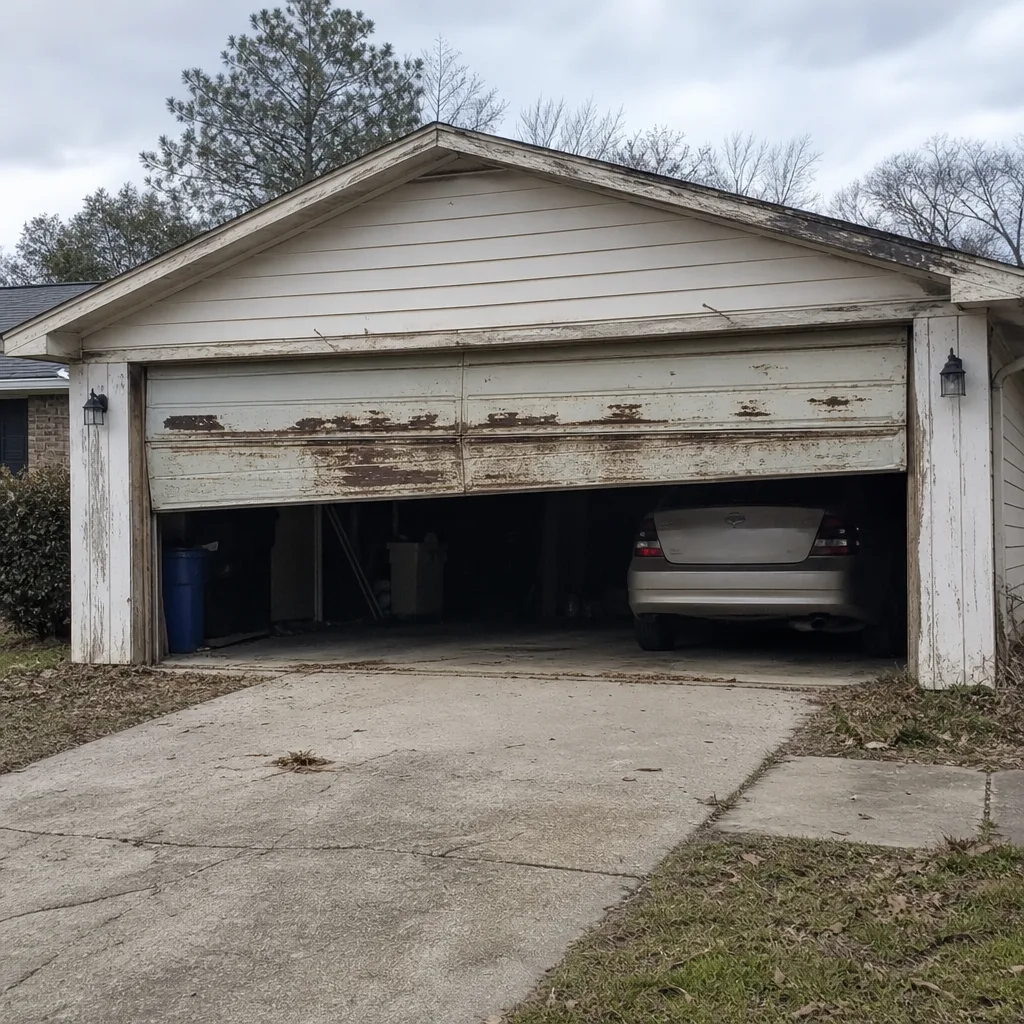 Before
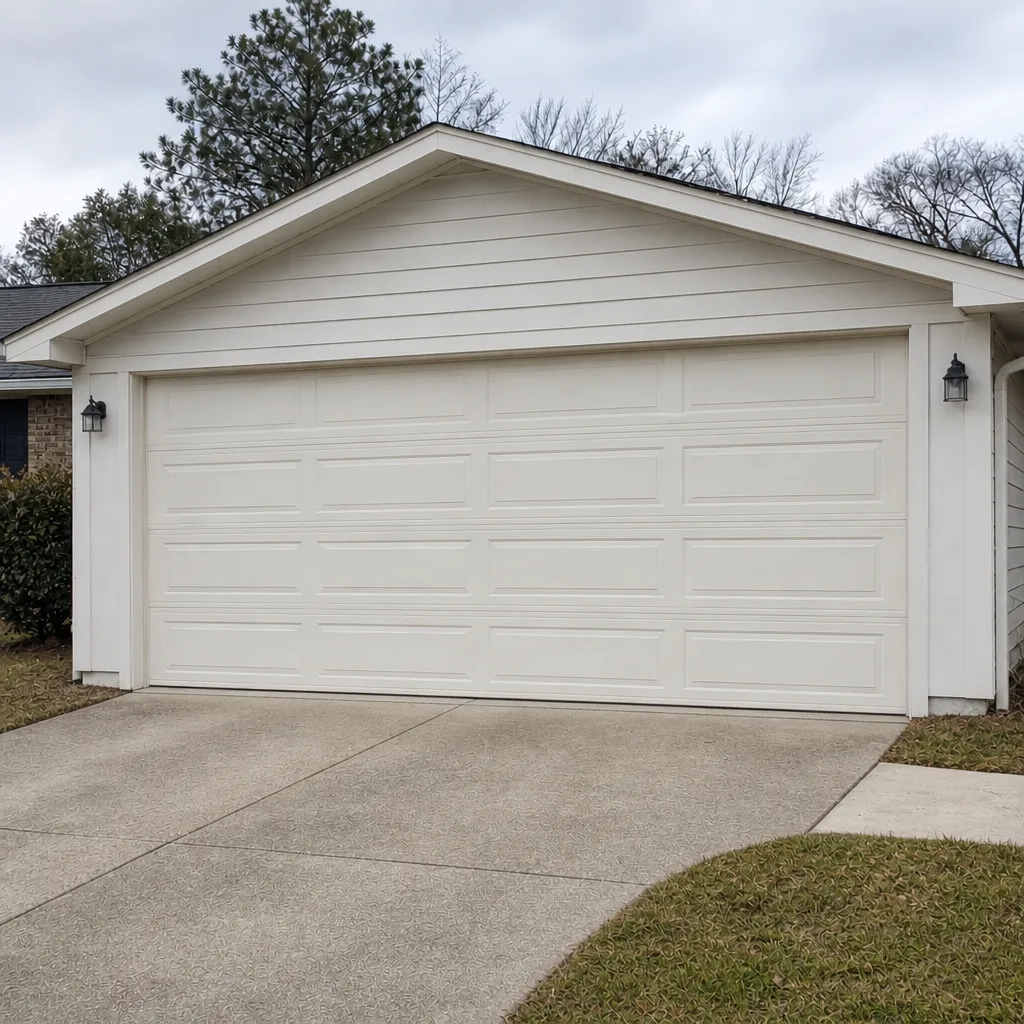 After
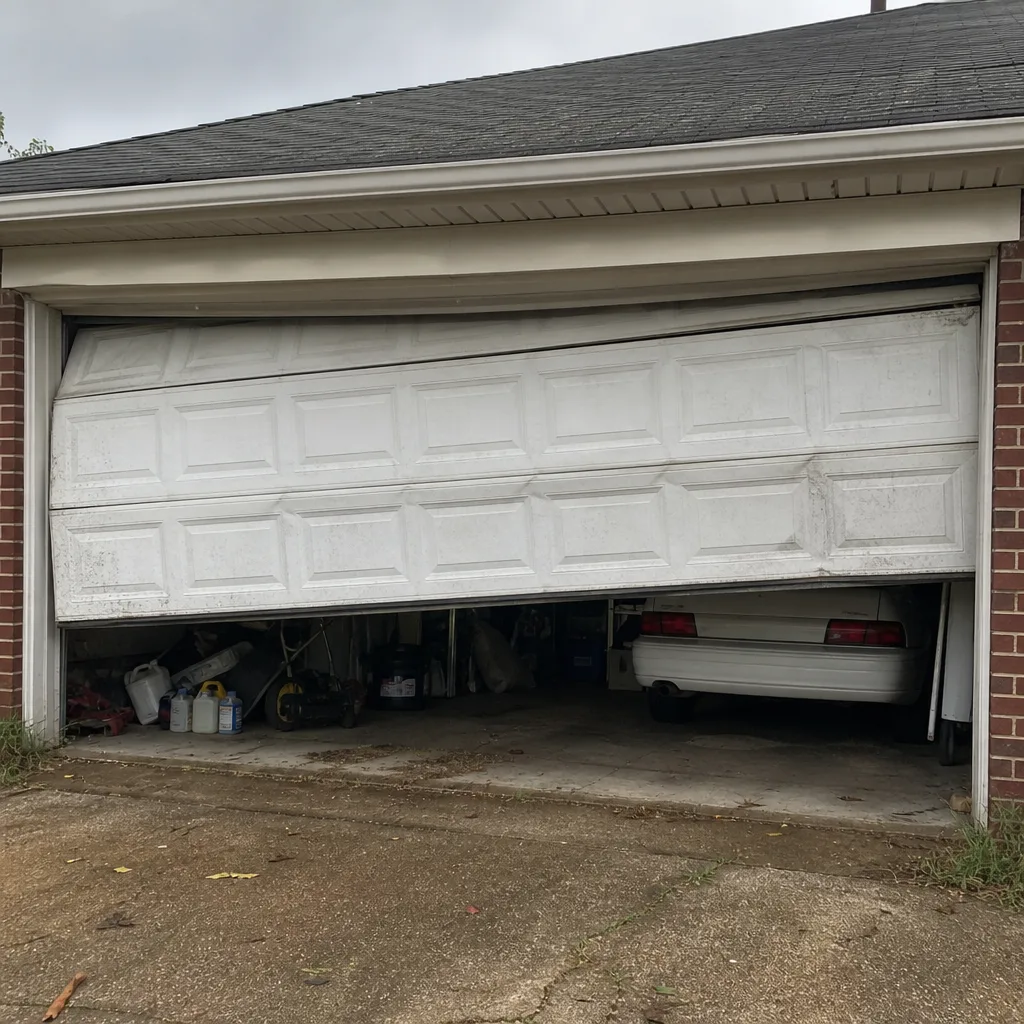 Before
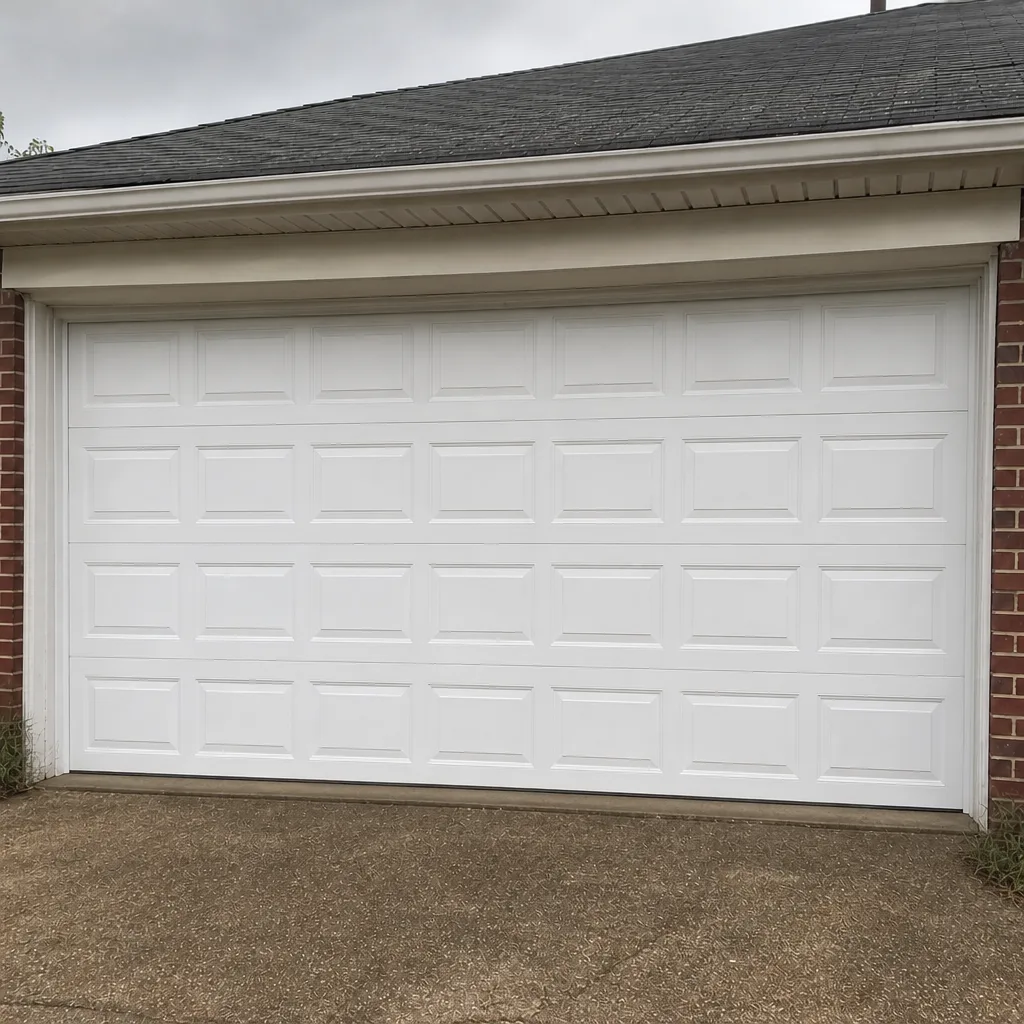 After
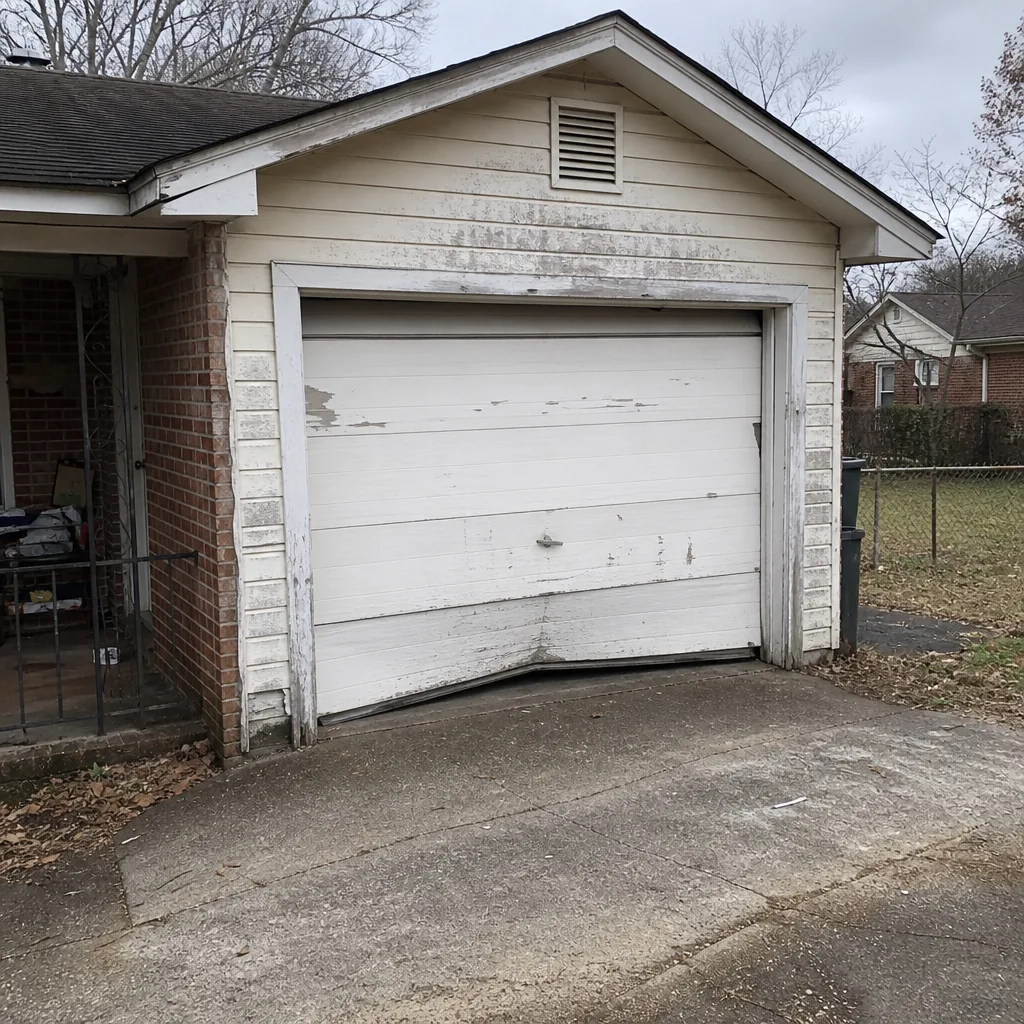 Before
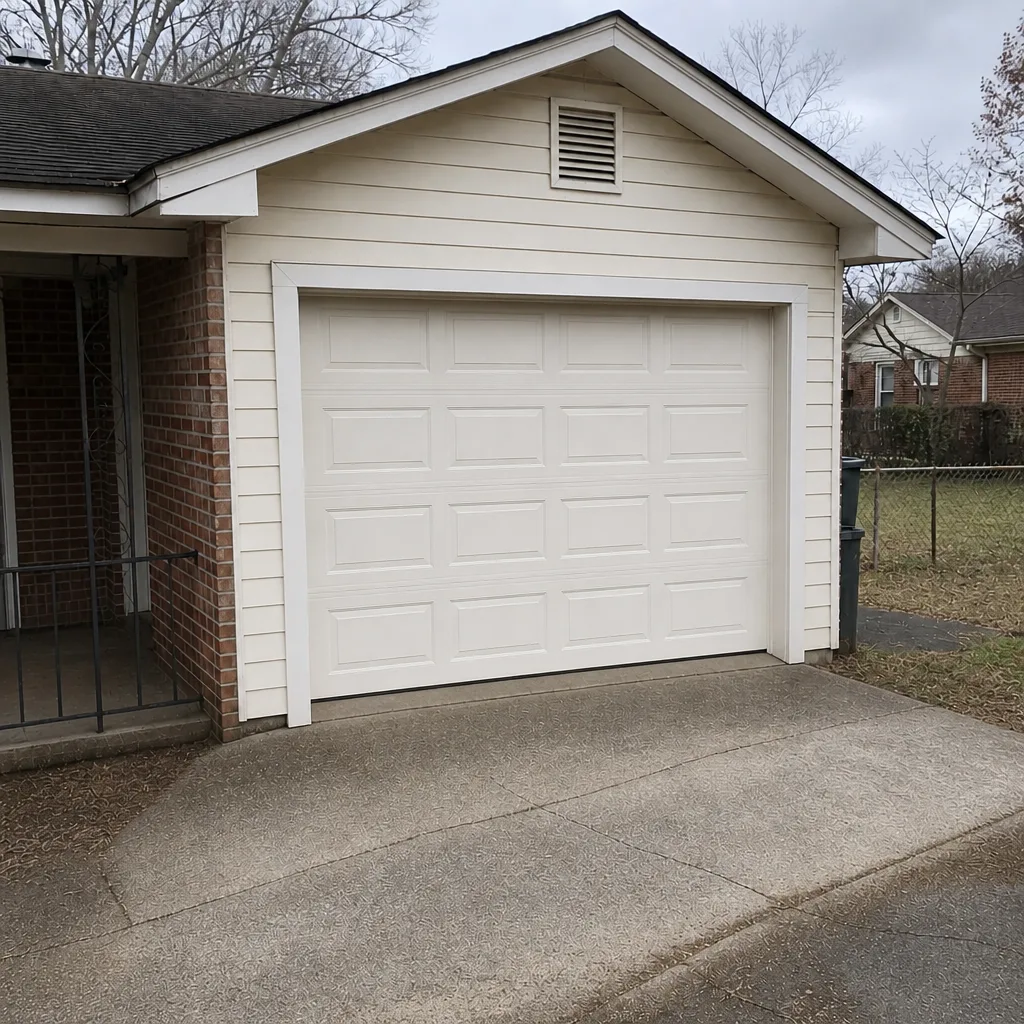 After
When to Call a Professional
You should call a professional for anything involving the door’s rated performance, its attachment to the framing, or the springs and cables that hold its weight. These are the parts where an incorrect install becomes a code problem and a safety problem at the same time. Springs and cables are under high tension, and working on them without the right tools and training is dangerous. A trained technician handles that safely, and that’s not a step to attempt yourself.
For repairs rather than installs, you also want a specialist because the diagnosis matters more than the part. A grinding opener, a door that won’t close, or a snapped spring can each have more than one cause, and a specialist will find the real one before quoting. We handle garage door opener repair across LiftMaster, Chamberlain, Genie, and Craftsman units, and we diagnose first rather than replacing parts you don’t need.
Ashby Garage Door Repair offers free estimates in Tuscaloosa. Call (855) 758-0653 to get your project classified and priced.
Frequently Asked Questions
Often, yes. A full replacement, a door with different rated performance, or any change to the opening or framing generally requires a permit in Tuscaloosa. A like-for-like swap that keeps the same size and rated wind-load classification may be exempt, but the classification is best confirmed with the city’s building department before you order. Call (855) 758-0653 if you’d like help identifying which category your project falls into.
No. Spring, cable, roller, and opener replacement are repair work and don’t require a permit in Tuscaloosa. Those repairs still call for a trained technician because springs and cables are under high tension, and a failed repair is a safety problem. Call (855) 758-0653 for a free estimate on a repair.
An inspector checks that the installed door matches the permitted spec: the label, the rated reinforcement hardware, the attachment to the framing, the balance, and safety reversal if a new opener is included. The inspection doesn’t grade the door’s appearance or cover wear items like springs and rollers.
Some do, and the risk sits with you as the homeowner. The permit is tied to your property and appears on your title record, so any unpermitted work surfaces at resale or at claim time on your side. Always ask for the permit number before work starts and verify it with the city.
It can. Insurers handling a storm-related claim on a garage door typically check that the door met code at install time, and a non-compliant install can reduce or void the claim. The permit record and the inspection sign-off are the evidence that protect you. Call (855) 758-0653 if your door has no documentation and you want to know your options.
Brands like Clopay, Raynor, Amarr, and Wayne Dalton all publish rated wind-load configurations for their doors, so the choice usually comes down to which door fits the rating your permit will require. We service eight major brands, so you’re not locked into one product line to get the rated door you need. Call (855) 758-0653 for a free estimate.
The Bottom Line
The permit on a garage door in Tuscaloosa is the document that proves the door was installed to the wind-load standard your home needs. A full replacement usually needs one; a same-size, same-rated swap may not; spring and opener repairs never do. Confirm the classification with the city’s building department before you order the door, verify the permit before work starts, and keep the inspection sign-off in your home file for as long as you own the place. For the door work itself, whether that’s a repair, an opener fix, or a full install, a specialist who does this trade exclusively will get it right the first time. Ashby Garage Door Repair offers free estimates in Tuscaloosa. Call (855) 758-0653. We answer 24/7. Fast dispatch from 7am to 7pm, Sunday through Friday.
See more about Ashby Garage Door Repair or find out what we handle in Tuscaloosa.
Written by the team at Ashby Garage Door Repair.